
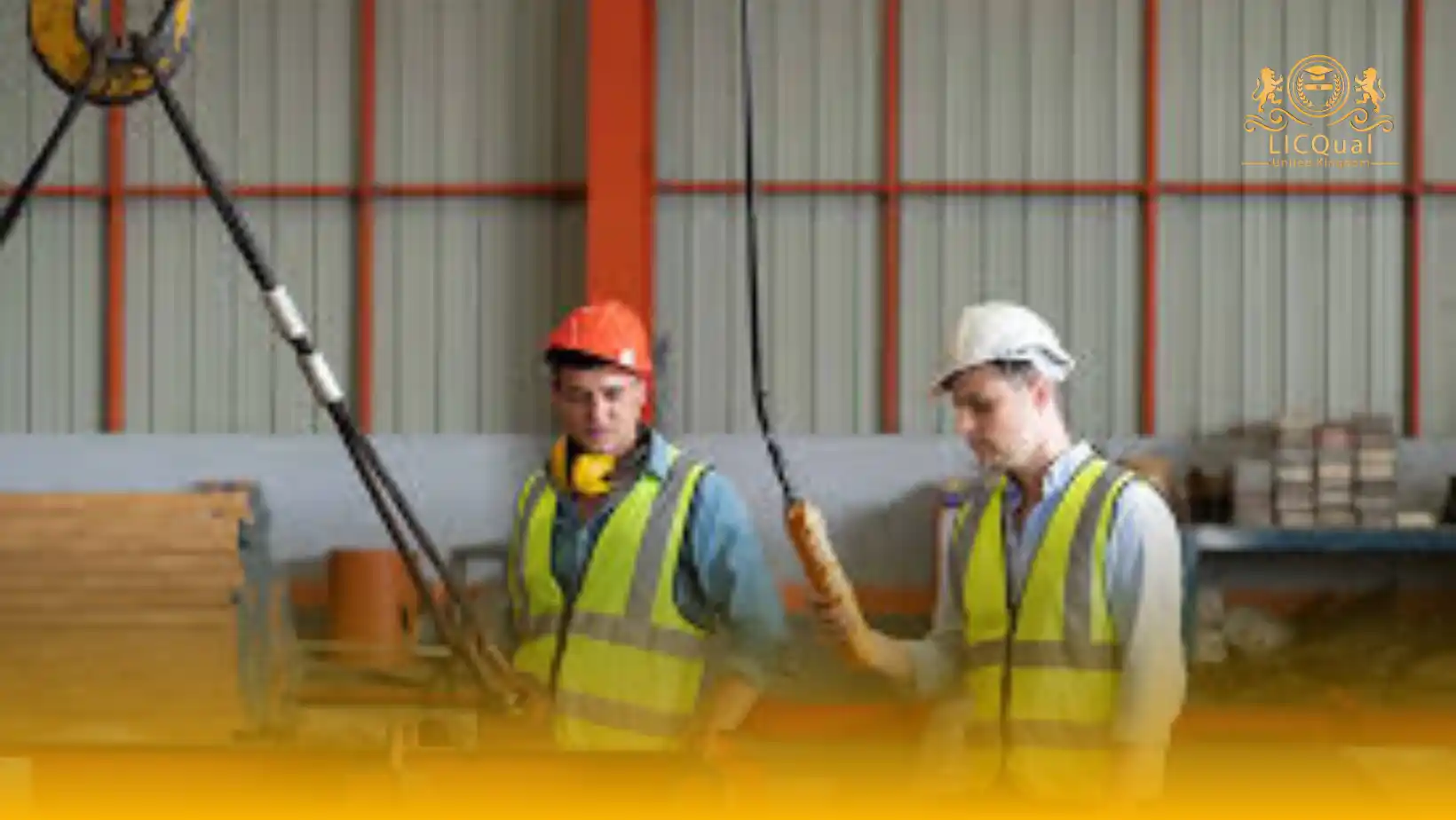
Professional Rigger Diploma
The LICQual Professional Rigger Diploma (Level 1 to 3) equips learners with comprehensive knowledge and practical skills required for safe and effective rigging across multiple industries. Learners progress through three structured levels, gaining a solid foundation in rigging principles, equipment handling, and safety protocols.
At Level 1, learners develop an understanding of basic rigging techniques, equipment identification, and site safety. Level 2 builds on this knowledge with advanced rigging methods, load calculations, and lifting operations. By Level 3, learners master complex rigging systems, advanced equipment management, and critical safety measures for high-risk environments.
Throughout the program, learners gain hands-on experience and practical insights into real-world rigging operations, ensuring competence in construction, maritime, industrial, and offshore settings. By completing the LICQual Professional Rigger Diploma, learners achieve a high level of expertise, enabling them to plan, execute, and manage rigging tasks safely, efficiently, and in full compliance with industry regulations and best practices.
Course Overview
Qualification Title
LICQual Professional Rigger Diploma (Level 1 to 3) – 30 Credits
Total Units
6
Total Credits
30
GLH
120
Qualification #
LICQ2200178
Qualification Specification
To enroll in the LICQual Professional Rigger Diploma, applicants must meet the following criteria:
|
Qualification# |
Unit Title |
Credits |
GLH |
|---|---|---|---|
|
LICQ2200178-1 |
Introduction to Rigging and Safety Protocols |
5 |
20 |
|
LICQ2200178-2 |
Rigging Equipment and Tools: Identification and Handling |
5 |
20 |
|
LICQ2200178-3 |
Lifting Operations and Load Calculations |
5 |
20 |
|
LICQ2200178-4 |
Advanced Rigging Techniques and Systems |
5 |
20 |
|
LICQ2200178-5 |
Rigging for High-Risk Environments |
5 |
20 |
|
LICQ2200178-6 |
Inspection, Maintenance, and Regulatory Compliance |
5 |
20 |
By the end of this course, learners will be able to:
1. Introduction to Rigging and Safety Protocols
- Demonstrate a foundational understanding of rigging concepts and terminology.
- Recognize the importance of safety in rigging operations and apply safety protocols effectively.
- Identify potential hazards and risk factors associated with rigging and lifting operations.
- Develop an understanding of safety equipment and personal protective gear used in rigging activities.
2. Rigging Equipment and Tools: Identification and Handling
- Identify different types of rigging equipment and tools used in lifting operations.
- Understand the proper handling, storage, and maintenance of rigging equipment.
- Demonstrate the ability to select appropriate equipment for specific rigging tasks.
- Explain the limitations and working capacities of rigging tools and equipment.
3. Lifting Operations and Load Calculations
- Perform load calculations to determine the appropriate rigging equipment for lifting operations.
- Understand the principles of load distribution, weight calculations, and center of gravity.
- Apply proper lifting techniques and procedures to ensure safe and efficient operations.
- Demonstrate the ability to conduct a risk assessment for lifting operations and make necessary adjustments.
4. Advanced Rigging Techniques and Systems
- Master advanced rigging techniques and systems, including complex lifting scenarios.
- Understand the principles of multi-point and multi-line rigging setups.
- Apply techniques for rigging in challenging environments, including confined spaces or complex configurations.
- Evaluate the use of mechanical advantage systems, such as pulleys and winches, in advanced rigging.
5. Rigging for High-Risk Environments
- Identify and understand the unique challenges of rigging in high-risk environments, such as offshore, construction, or hazardous areas.
- Develop strategies for ensuring safety and operational efficiency in high-risk rigging operations.
- Demonstrate the application of specialized equipment and techniques for working in hazardous environments.
- Evaluate risk management practices and implement control measures to mitigate hazards in high-risk settings.
6. Inspection, Maintenance, and Regulatory Compliance
- Conduct inspections of rigging equipment to ensure it meets safety standards and operational readiness.
- Implement maintenance procedures to prolong the life and reliability of rigging tools and equipment.
- Understand and apply regulatory requirements and industry standards for rigging operations.
- Demonstrate knowledge of reporting and documentation practices for maintaining compliance with safety and regulatory standards.
This diploma is ideal for:
Assessment and Verification
All units within this qualification are subject to internal assessment by the approved centre and external verification by LICQual. The qualification follows a criterion-referenced assessment approach, ensuring that learners meet all specified learning outcomes.
To achieve a ‘Pass’ in any unit, learners must provide valid, sufficient, and authentic evidence demonstrating their attainment of all learning outcomes and compliance with the prescribed assessment criteria. The Assessor is responsible for evaluating the evidence and determining whether the learner has successfully met the required standards.
Assessors must maintain a clear and comprehensive audit trail, documenting the basis for their assessment decisions to ensure transparency, consistency, and compliance with quality assurance requirements.