
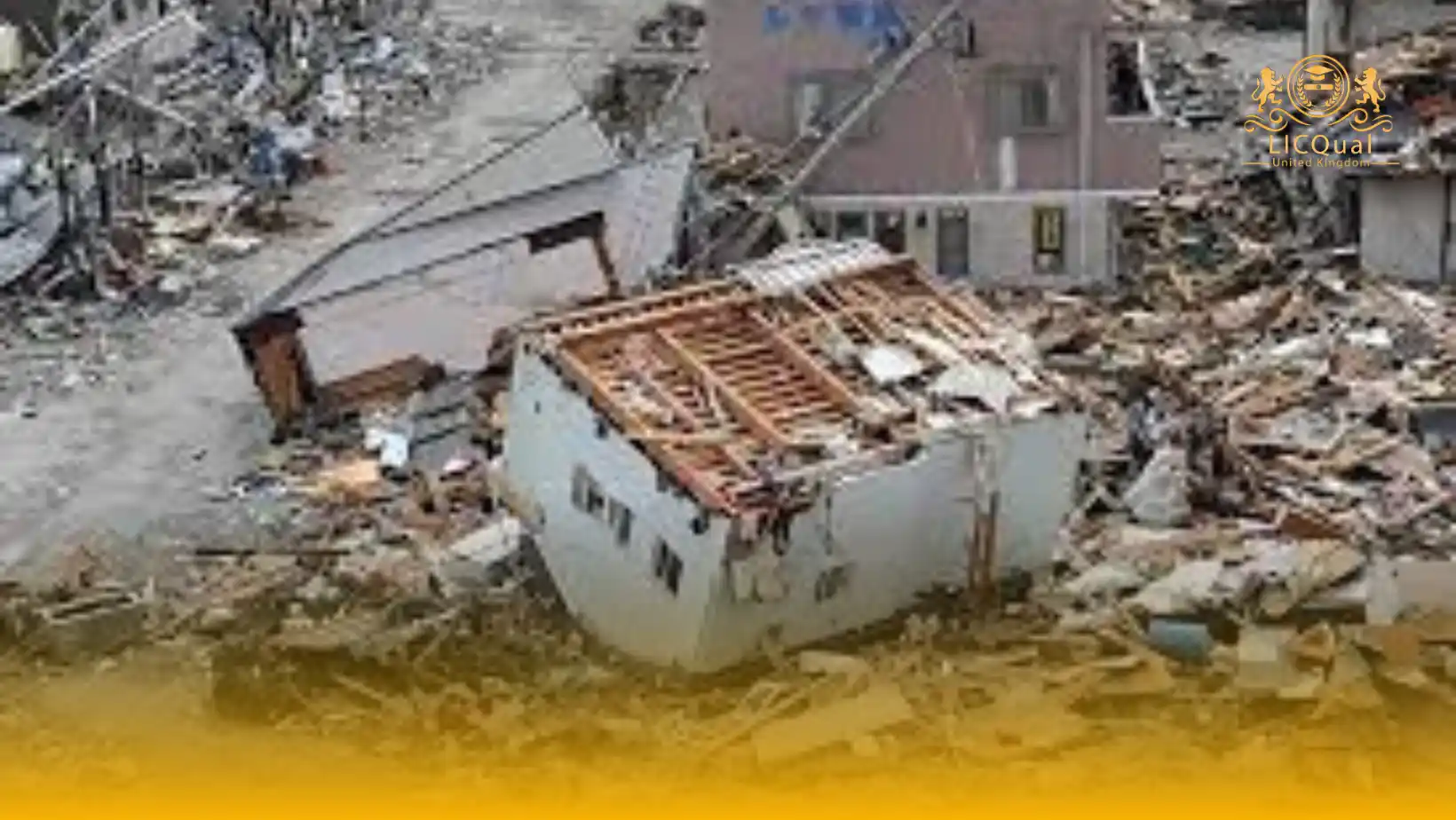
Disaster Management
The LICQual Level 6 International Diploma in Disaster Management is a premier qualification developed for the learner seeking advanced expertise in managing complex disaster scenarios at a global level. This diploma equips the learner with in-depth strategic knowledge and applied skills required to address large-scale emergencies, from preparedness and response to long-term recovery and resilience building.
Designed for the learner operating in senior disaster management, humanitarian, or public sector roles, this qualification strengthens the learner’s ability to lead disaster risk reduction initiatives across diverse regions and operational environments. The curriculum provides the learner with a global perspective on disaster governance, crisis communication, sustainable recovery frameworks, and international coordination mechanisms.
Throughout the programme, the learner develops the analytical and leadership capabilities needed to manage natural and man-made disasters effectively while aligning response efforts with international standards and best practices. The LICQual Level 6 International Diploma in Disaster Management empowers the learner to enhance organisational resilience, guide high-level decision-making, and contribute meaningfully to global disaster preparedness and recovery efforts.
Course Overview
Qualification Title
LICQual Level 6 International Diploma in Disaster Management
Total Units
6
Total Credits
120
GLH
480
Qualification #
LICQ2200009
Qualification Specification
To enroll in the LICQual Level 6 International Diploma in Disaster Management, applicants must meet the following criteria:
|
Qualification# |
Unit Title |
Credits |
GLH |
|---|---|---|---|
|
LICQ2200009-1 |
Management of Natural Hazards |
60 |
80 |
|
LICQ2200009-2 |
Forecasting, Monitoring & Early warning in Disaster Management |
60 |
80 |
|
LICQ2200009-3 |
Research Design and Methodology in Disaster Management |
60 |
80 |
|
LICQ2200009-4 |
Community Innovation and Disasters |
60 |
80 |
|
LICQ2200009-5 |
Decision making in Disaster Management |
60 |
80 |
|
LICQ2200009-6 |
Crisis Management in the Twenty-First Century: “Unthinkable” |
60 |
80 |
By the end of this course, learners will be able to:
1. Management of Natural Hazards
- Understand the causes, impacts, and types of natural hazards, including earthquakes, floods, and hurricanes.
- Assess vulnerability and risks associated with natural hazards in different regions and populations.
- Develop strategies and interventions to manage and mitigate the impact of natural hazards on communities and infrastructure.
2. Forecasting, Monitoring & Early Warning in Disaster Management
- Explore advanced forecasting and monitoring systems used to predict and track disasters.
- Understand the role of early warning systems in reducing the impact of disasters on human life and property.
- Design and implement effective early warning systems tailored to different types of natural hazards and contexts.
3. Research Design and Methodology in Disaster Management
- Gain proficiency in research methodologies and data collection techniques specific to disaster management.
- Apply research design principles to develop comprehensive studies on disaster risk reduction and recovery.
- Critically evaluate research findings to inform disaster management policies and practices at local, national, and international levels.
4. Community Innovation and Disasters
- Examine the role of community-led innovations in disaster response and recovery efforts.
- Identify and evaluate successful community-based initiatives that have improved resilience and disaster preparedness.
- Design strategies to empower communities to actively participate in disaster management processes and solutions.
5. Decision Making in Disaster Management
- Develop critical decision-making skills to manage complex disaster situations effectively.
- Understand the importance of timely and informed decision-making in minimizing disaster impact and loss.
- Apply decision-making frameworks and tools to enhance coordination, resource allocation, and response efforts during a disaster.
6. Crisis Management in the Twenty-First Century: “Unthinkable” Events in “Inconceivable” Contexts
- Analyze modern crisis management strategies for handling unprecedented or rare disaster events.
- Understand how to prepare for and manage “unthinkable” events in “inconceivable” contexts, such as pandemics, global terrorism, or technological failures.
- Develop frameworks for addressing high-risk, low-probability events and the complexities of managing crises that challenge traditional disaster management models.
This diploma is ideal for:
Assessment and Verification
All units within this qualification are subject to internal assessment by the approved centre and external verification by LICQual. The qualification follows a criterion-referenced assessment approach, ensuring that learners meet all specified learning outcomes.
To achieve a ‘Pass’ in any unit, learners must provide valid, sufficient, and authentic evidence demonstrating their attainment of all learning outcomes and compliance with the prescribed assessment criteria. The Assessor is responsible for evaluating the evidence and determining whether the learner has successfully met the required standards.
Assessors must maintain a clear and comprehensive audit trail, documenting the basis for their assessment decisions to ensure transparency, consistency, and compliance with quality assurance requirements.