
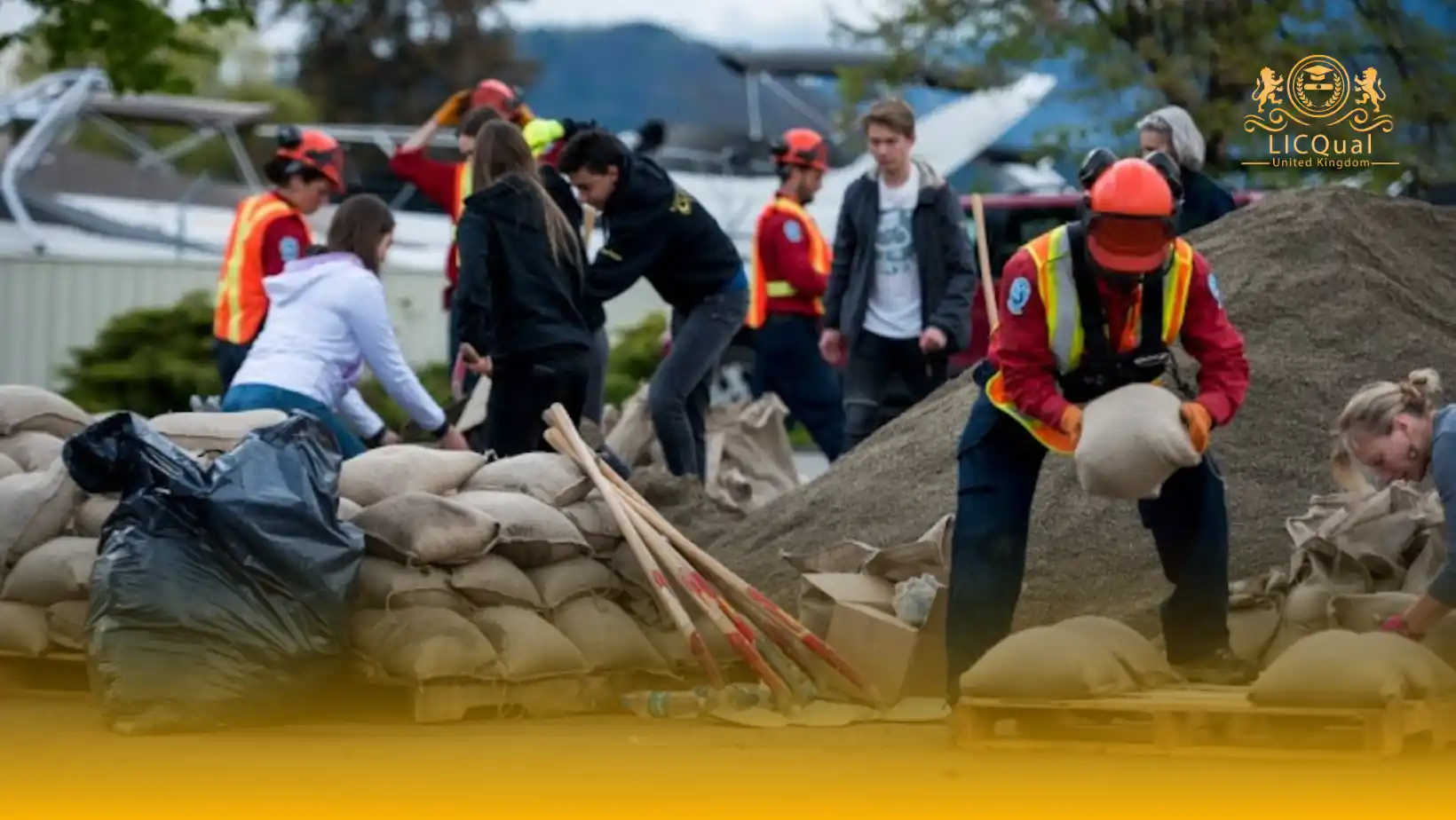
Disaster Management
The LICQual Level 3 International Diploma in Disaster Management is a globally recognized qualification designed to equip learners with the knowledge and practical skills needed to manage and mitigate disaster risks effectively. This course provides learners with a comprehensive understanding of disaster management frameworks, risk reduction principles, and the operational strategies required for responding to emergencies on an international scale.
Learners gain expertise in coordinating disaster response, implementing humanitarian aid initiatives, and applying best practices for disaster preparedness and recovery. The program emphasizes the importance of international cooperation and equips learners with the tools to make informed decisions during crises.
Ideal for learners pursuing careers in emergency response, humanitarian organizations, government agencies, or disaster planning, the LICQual Level 3 International Diploma in Disaster Management ensures learners develop the core competencies to handle both immediate and long-term challenges. By completing this diploma, learners are prepared to contribute effectively to global disaster resilience and recovery efforts.
Course Overview
Qualification Title
LICQual Level 3 International Diploma in Disaster Management
Total Units
6
Total Credits
60
GLH
240
Qualification #
LICQ2200006
Qualification Specification
To enroll in the LICQual Level 3 International Diploma in Disaster Management, applicants must meet the following criteria:
|
Qualification# |
Unit Title |
Credits |
GLH |
|---|---|---|---|
|
LICQ2200006-1 |
Disaster Management: A Helicopter View |
10 |
40 |
|
LICQ2200006-2 |
Disaster Mitigation |
10 |
40 |
|
LICQ2200006-3 |
Disaster Preparedness |
10 |
40 |
|
LICQ2200006-4 |
Disasters Response |
10 |
40 |
|
LICQ2200006-5 |
Disaster Recovery |
10 |
40 |
|
LICQ2200006-6 |
Information Technology in Disaster Management |
10 |
40 |
By the end of this course, learners will be able to:
Disaster Management: A Helicopter View
- Gain a comprehensive understanding of the principles and frameworks of disaster management.
- Analyze the key concepts, phases, and global frameworks involved in disaster management.
- Identify the roles of various stakeholders (government agencies, NGOs, and international organizations) in managing disaster scenarios.
- Evaluate the global and local challenges faced in disaster management and the necessary strategies for coordination and collaboration.
Disaster Mitigation
- Understand the core strategies and measures used to reduce the impact of potential disasters.
- Assess the significance of risk reduction and the role of policy-making in disaster mitigation.
- Identify methods to improve resilience in communities vulnerable to disasters, particularly through infrastructural, environmental, and social mitigation efforts.
- Develop disaster mitigation plans tailored to specific regional or national risks.
Disasters Response
- Understand the key principles and steps involved in disaster response and emergency management.
- Examine the logistics and operational strategies required to provide immediate aid and relief during disaster scenarios.
- Learn how to coordinate with international organizations and local authorities to ensure timely and effective disaster response.
- Evaluate case studies of successful and unsuccessful disaster responses to draw key lessons for future practice.
Disaster Preparedness
- Understand the importance of planning and preparation for various types of disasters, including natural and man-made hazards.
- Develop disaster preparedness plans for individuals, communities, and organizations.
- Identify and analyze early warning systems and risk assessment tools used to prevent and prepare for disasters.
- Learn to conduct simulations and drills to enhance readiness and response times in case of emergencies.
Information Technology in Disaster Management
- Explore the role of information technology in enhancing disaster management practices.
- Understand how data collection, analysis, and communication technologies are utilized for disaster risk reduction, response, and recovery.
- Evaluate the effectiveness of Geographic Information Systems (GIS), remote sensing, and mobile applications in disaster management.
- Learn how to integrate technological solutions into disaster management plans to improve coordination and decision-making.
Disaster Recovery
- Develop strategies for long-term recovery and rebuilding after a disaster.
- Assess the social, economic, and environmental challenges faced during recovery and reconstruction phases.
- Learn how to mobilize resources, including international aid, to support recovery efforts.
- Understand the role of community participation in the recovery process and the importance of sustainable recovery strategies to build resilience.
This diploma is ideal for:
Assessment and Verification
All units within this qualification are subject to internal assessment by the approved centre and external verification by LICQual. The qualification follows a criterion-referenced assessment approach, ensuring that learners meet all specified learning outcomes.
To achieve a ‘Pass’ in any unit, learners must provide valid, sufficient, and authentic evidence demonstrating their attainment of all learning outcomes and compliance with the prescribed assessment criteria. The Assessor is responsible for evaluating the evidence and determining whether the learner has successfully met the required standards.
Assessors must maintain a clear and comprehensive audit trail, documenting the basis for their assessment decisions to ensure transparency, consistency, and compliance with quality assurance requirements.